Genetics May Account for Up to Half of Human Lifespan
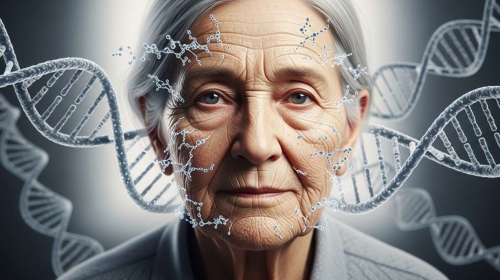
According to HealthDay News, a large-scale study indicates that genetics can account for up to 55% of human lifespan—a figure significantly higher than previous estimates, which ranged from 6% to 33%.
In this research, scientists studied twins and distinguished mortality caused by external factors, such as accidents or infections, from intrinsic, aging-related mortality, including chronic diseases and natural health decline. They noted that this approach provides a clearer understanding of the role of genetics in determining lifespan.
Ben Shnehar, the study’s lead author, stated: “The figure we obtained is not arbitrary. In nearly every twin study, heritability is around 50%. Even the heritability of age at menopause—a naturally age-related decline—is approximately 50%.”
Morten Schibay-Nielsen from the University of Copenhagen added: “This approach helped eliminate what he calls ‘external noise,’ allowing for a more precise study of aging.” He explained: “Humans can live up to around 120 years, a yeast cell lives 13 days, and bowhead whales can reach 200 years; this indicates that our genes set the boundaries of our lifespan.”
However, Dr. Eric Verdin, CEO of the Buck Institute for Research on Aging in California, emphasized that some deaths classified as “external,” such as those caused by infections like COVID-19, may still be influenced by genetics: “We know that your genes play a major role in how your body responds to infections.”
Shnehar noted that after reanalyzing the data and accounting for age-related health risks, genetics still explains approximately 50% of the differences in human lifespan.
These findings also support previous research showing that individuals who live to 100 years often possess genes that reduce susceptibility to chronic diseases. Shnehar added: “It is clear that these individuals are not merely striving to reach 100 years of age; they carry protective genes that safeguard them against age-related damage.”
To date, only a few genes, including FOXO3, APOE, and SIRT6, have been directly associated with lifespan. Verdin stated that lifespan is likely determined by the combined effects of multiple genes rather than a single gene.
Despite the significant role of genetics, both researchers emphasized the importance of lifestyle. Shnehar explained: “If genetics accounts for 55% of lifespan, the remaining 45% is influenced by diet, exercise, and other lifestyle factors. Therefore, even though genetics establishes a potential range for natural lifespan, lifestyle can have a considerable impact.”
